- Decimal Odds
- Hong Kong Odds
- Indonesian Odds
- American Odds
- Malay Odds
 English
- English
 Vietnam
 Thailand

TA: The World Cup Does Not Define Cristiano Ronaldo’s Career — His Records Do


-
1
 Ethan BlackabyFollow90%Win Rate +60.1%ROI 10Tips 1.93Avg Odds
 -
2
 RinoandiFollow83.3%Win Rate +59.5%ROI 12Tips 1.89Avg Odds
 -
3
 Imad masiFollow82.4%Win Rate +48.9%ROI 17Tips 1.91Avg Odds
 -
4
 IqtidarFollow81.8%Win Rate +38.2%ROI 13Tips 1.84Avg Odds
 -
5
 Rocco LambertiFollow81.3%Win Rate +40%ROI 34Tips 1.89Avg Odds
 -
6
 WissywaxplanetWon 12/15Follow80%Win Rate +38.2%ROI 15Tips 1.76Avg Odds

TA: The World Cup Does Not Define Cristiano Ronaldo’s Career — His Records Do
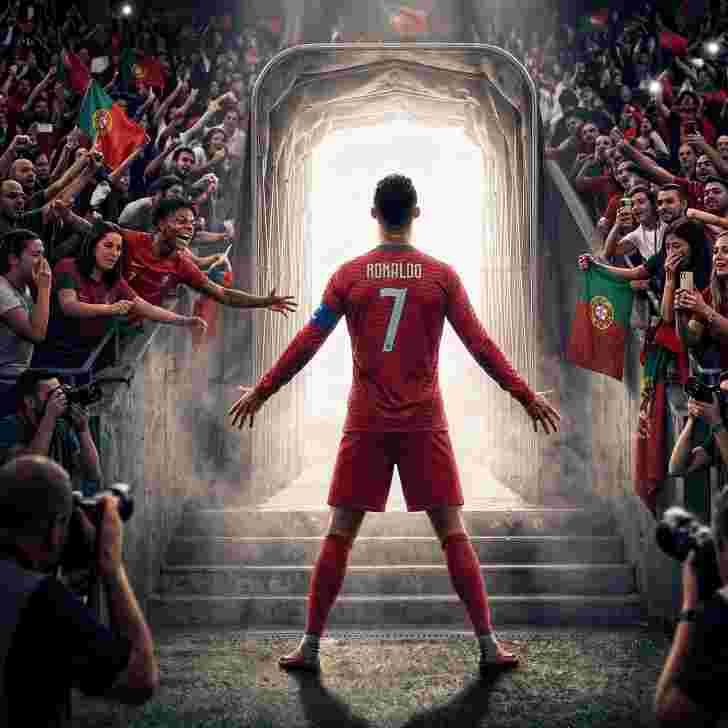
In the lead-up to the 2010 World Cup, Nike brought together a host of global superstars — including Wayne Rooney, Didier Drogba, Ronaldinho, Fabio Cannavaro, Franck Ribéry and Cristiano Ronaldo — for its “Write the Future” advertising campaign.
The concept was brilliant. Six football icons appeared in dramatic scenes, suggesting that their careers and lives would be defined by the tournament about to take place in South Africa. For Ronaldo, the advert showed him standing over a free kick, imagining what his future might look like if he scored and helped Portugal achieve glory.
The possibilities were extraordinary: cutting the ribbon at the opening of “Ronaldo Stadium”, making a cameo appearance in The Simpsons, having a giant statue built in his honour, and attending the premiere of Ronaldo: The Movie while adoring fans screamed his name.
Yet Ronaldo’s relationship with the World Cup — spanning six tournaments and two decades — has been far from a fairytale.
Only eight players have scored more World Cup goals than his total of 11. But considering Ronaldo’s talent, his longevity, and his status as the all-time leading scorer in both club and international football, that number feels frustratingly modest.
For a sporting superhero, the World Cup has been his kryptonite.
But the story is far more complicated than that. Six tournaments have brought six different kinds and levels of disappointment. There have been failures, but also moments of brilliance.
Portuguese football has had two so-called “Golden Generations” — one made up of players born in the early 1970s, and another consisting of talents born in the early-to-mid 1990s. Born in 1985, Ronaldo sits almost perfectly between those two eras.
By the time Portugal had built a strong enough supporting cast to enter a World Cup as genuine title contenders, Ronaldo was already entering the latter stages of his career.
More than anything, the weight of expectation became suffocating. And that pressure often came from the belief that only a superstar of Ronaldo’s level could carry an entire nation to glory — exactly the idea that Nike’s advert seemed to suggest.
Arguably, Ronaldo’s best World Cup came in his first one.
At just 21 years old, he was still an inconsistent young player at Manchester United, but he was already an important member of a Portugal team built around Luís Figo. The 2006 World Cup became a turning point.
In the quarter-final against England, Ronaldo was Portugal’s biggest attacking threat. After extra time ended goalless, he scored the decisive penalty in the shootout.
But he also became a villain in England.
His exaggerated reactions to several challenges — and, more controversially, his role in urging the referee to send off his Manchester United teammate Wayne Rooney after a clash — angered English players, supporters and media. The moment was made even more infamous when Ronaldo appeared to wink towards the Portuguese bench after the red card was shown.
That was the beginning of Ronaldo’s complicated World Cup story.
It was also the last time he reached the semi-finals of the tournament.
His second World Cup, the one that followed the “Write the Future” campaign, ended in heartbreaking disappointment.
Portugal were eliminated by Spain in the round of 16, while Ronaldo faced heavy criticism from the Portuguese media. After the match, he admitted he was “broken” and described feeling “an unimaginable sadness”.
His only goal in the tournament came as Portugal defeated North Korea 7-0, with Ronaldo scoring the seventh goal.
His third World Cup, in 2014, produced more of the same frustrations.
At 29 years old, he should have been entering his prime years, but another opportunity to “write the future” slipped away. Portugal were eliminated in the group stage.
By 2018, Ronaldo was 33. His mindset appeared simple: succeed now, or perhaps never have another chance.
In Portugal’s opening group match against Spain, he scored a stunning hat-trick, including a sensational late free kick that secured a thrilling 3-3 draw in Sochi.
But Ronaldo and Portugal’s World Cup journey ended in the last 16 after defeat to Uruguay.
He attempted six shots, but as the match moved away from his team, those efforts became increasingly desperate.
People began to wonder — just as they had with Lionel Messi that summer — whether his final opportunity to win the World Cup had disappeared.
Ronaldo returned for the 2022 World Cup after a difficult second spell at Manchester United.
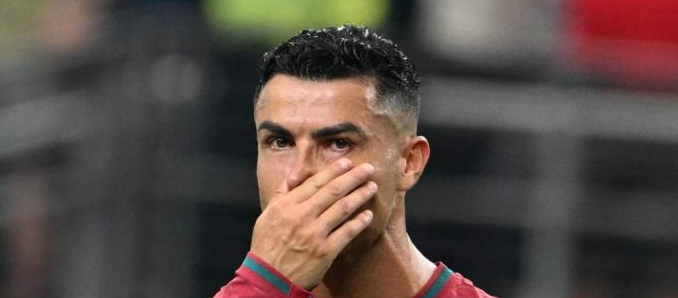
He failed to score despite taking 23 shots across five appearances. Portugal were eliminated in the quarter-finals by Morocco, with Ronaldo starting on the bench before entering as a substitute and leaving the pitch in tears.
To be fair, the simplest argument was that the 2022 World Cup was simply one tournament too many for him.
But that description felt more appropriate after Qatar than it did in previous weeks.
The statistics told the story: five appearances, 11 shots, one penalty, no assists, and losing his starting place after the group stage.
The same argument could also have been made after Euro 2024: five matches, 23 shots, no goals and one assist.
If those tournaments were “one too many”, then Ronaldo had already gone three tournaments beyond what many expected.
Watching him during Euro 2024 was painful at times — seeing him exhausted but still being kept on the pitch for 120 minutes in knockout matches against Slovenia and France.
But watching him at this World Cup has felt different.
Aside from a difficult opening match against DR Congo, there has been far less struggle. Physically, he appears to be in better condition than he was in Qatar.
In 2022, Ronaldo often looked frustrated, isolated from teammates and openly unhappy when substituted.
This summer, however, his body language has been much more positive — as both captain and teammate.
His appearance at Portugal’s pre-match press conference last Sunday felt like a performance in itself, reinforcing the impression that he has found a happier mindset at this tournament.
When asked about his performances at this World Cup, Ronaldo said:
“Despite some different opinions you may have, I haven’t done too badly, right? I’ve scored three goals. Of course, others have scored more because they have been excellent, but I haven’t done badly either.”
Asked about his motivation, he said his focus had always been on:
“Enjoying the game as much as possible, considering this is my last World Cup — it really is my last one — and enjoying every day.”
When Ronaldo spoke to British broadcaster Piers Morgan last November, he was asked whether winning the World Cup remained his dream.
His response was revealing:
“If you ask me, ‘Cristiano, is winning the World Cup your dream?’ No, it’s not my dream. Winning the World Cup would not change my name in football history. People say, ‘Oh, if Ronaldo wins the World Cup, he will become the greatest.’ I don’t agree.”
He admitted he would love to win it, but insisted that success or failure this summer would not define his career.
“Define what?” he questioned.
“Define whether I am one of the best players in history? Winning one competition, six games, seven games? Do you think that is fair? It’s not fair.”
And the truth is, the World Cup does not define Cristiano Ronaldo’s career.
It should not define his legacy — just as Lionel Messi’s career would not have been defined had Argentina lost the 2022 World Cup final on penalties to France.
Ronaldo’s career is defined by the records he has broken.
He has scored more goals than any other player in football history, with more than 830 goals at club level and 146 goals for his country.
He is Real Madrid’s all-time leading scorer, with 450 goals in 438 appearances, and the Champions League’s greatest goalscorer, with 140 goals in 183 appearances.
He has made more appearances for his national team than any other male footballer.
Quite simply, the idea that his career could be judged negatively because he never won a World Cup is absurd.
“The day will come,” Ronaldo said when asked about retirement.
“But honestly, whatever happens next, I will leave with a clear conscience — not 100%, but 1,000% — because I have given everything to football.
“I don’t need it [the World Cup] to prove anything. I live very well. But it is about passion. I play football because I love it.
“Whatever happens tomorrow, I cannot put pressure on myself and say we have an obligation to win.”
That mindset — the confidence that comes from knowing his legacy is already secure and cannot be changed by what happens next — has carried him through the past few weeks.
It has allowed his sixth and final World Cup to feel more enjoyable than the ones that came before.
Is there disappointment? Of course.
But at this stage of his career, he has every right to believe he has given everything he had.
In the end, Nike’s advert got one thing wrong.
The glorious future that Ronaldo was supposed to “write” on the World Cup stage was not waiting for him in the way its director imagined.
But it still happened.
Cristiano Ronaldo’s legacy and story — as one of the greatest players in football history — have already been written over the past 20 years.
He should not, and does not need to, spend the rest of his life regretting the one trophy that slipped away.
 Telegram
 Facebook
 X
X