- Decimal Odds
- Hong Kong Odds
- Indonesian Odds
- American Odds
- Malay Odds
 English
- English
 Vietnam
 Thailand

IFAB Clarifies VAR Rule: Simulation Cannot Be Reviewed Under Mistaken Identity Protocol


-
1
 Freeman55Won 8/8Follow85.7%Win Rate +50.9%ROI 14Tips 1.90Avg Odds
 -
2
 VIP100%Follow80%Win Rate +44.5%ROI 17Tips 1.87Avg Odds
 -
3
 VIAMOND💎Won 5/5Follow77.3%Win Rate +47%ROI 23Tips 1.91Avg Odds
 -
4
 SILENCE🌓XS✨Won 4/5Follow76.9%Win Rate +47.7%ROI 14Tips 1.93Avg Odds
 -
5
 Football XWon 5/6Follow75%Win Rate +23.7%ROI 12Tips 1.96Avg Odds
 -
6
 CHRISPUSFollow73.3%Win Rate +36.8%ROI 15Tips 1.92Avg Odds
IFAB Clarifies VAR Rule: Simulation Cannot Be Reviewed Under Mistaken Identity Protocol
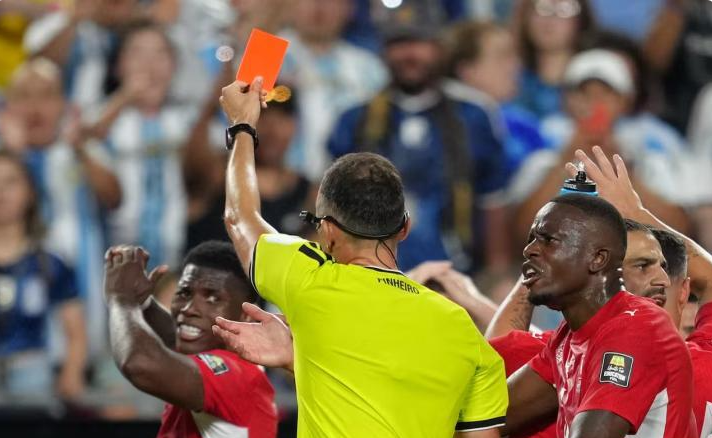
According to The Athletic, the International Football Association Board (IFAB) has clarified the controversial "mistaken identity" VAR rule that sparked debate during the FIFA World Cup.
The rule can only be used to confirm the identity of the player who should be sanctioned. It cannot be used to overturn the foul itself, nor does it apply to incidents of simulation (diving). In other words, the issue is not whether Breel Embolo simulated. The key point is that, under the current Laws of the Game, VAR had no authority to intervene in that manner and have a player receive a second yellow card for simulation.
This means that, under the newly clarified interpretation, Switzerland striker Breel Embolo would not have been shown the second yellow card that led to his dismissal for alleged simulation during the World Cup quarter-final against Argentina.
The 2026 World Cup was the first tournament to allow VAR to intervene in cases of mistaken identity involving both yellow and red cards, but the implementation led to confusion.
In the United States' match against Paraguay, referee penalized Chris Richards for a foul on Miguel Almirón and showed him a yellow card. The referee overturned the original decision, rescinded Richards' yellow card, and instead booked Almirón for simulation.
An even more controversial incident occurred in Switzerland's quarter-final against Argentina. Following the review, Embolo was judged to have simulated, was shown a yellow card—his second of the match—and sent off, while Paredes' booking was rescinded.
Although IFAB acknowledged that using the mistaken identity protocol to deal with simulation "was well received" during the World Cup, it has now made clear that such use of the rule is no longer permitted. The board said it will revisit the issue as part of a broader review of the VAR protocol. Until then, VAR cannot be used to change decisions on simulation under the mistaken identity provision.
 Telegram
 Facebook
 X
X