- Decimal Odds
- Hong Kong Odds
- Indonesian Odds
- American Odds
- Malay Odds
 English
- English
 Vietnam
 Thailand

German Football League Discusses €1 Billion Loan Deal with Apollo Sports Capital Amid Renewed Investment Debate


-
1
 Freeman55Won 8/8Follow85.7%Win Rate +50.9%ROI 14Tips 1.90Avg Odds
 -
2
 VIAMOND💎Won 5/5Follow83.3%Win Rate +57.5%ROI 19Tips 1.92Avg Odds
 -
3
 Side Eye NemoWon 6/7Follow83.3%Win Rate +59.8%ROI 13Tips 1.91Avg Odds
 -
4
 Crypto BetManFollow75%Win Rate +30.4%ROI 22Tips 1.91Avg Odds
 -
5
 VIP100%Follow73.3%Win Rate +29.2%ROI 16Tips 1.87Avg Odds
 -
6
 CHRISPUSFollow73.3%Win Rate +36.8%ROI 15Tips 1.92Avg Odds
German Football League Discusses €1 Billion Loan Deal with Apollo Sports Capital Amid Renewed Investment Debate
According to The Athletic (TA), the German Football League has held discussions with Apollo Sports Capital over a proposed €1 billion loan.
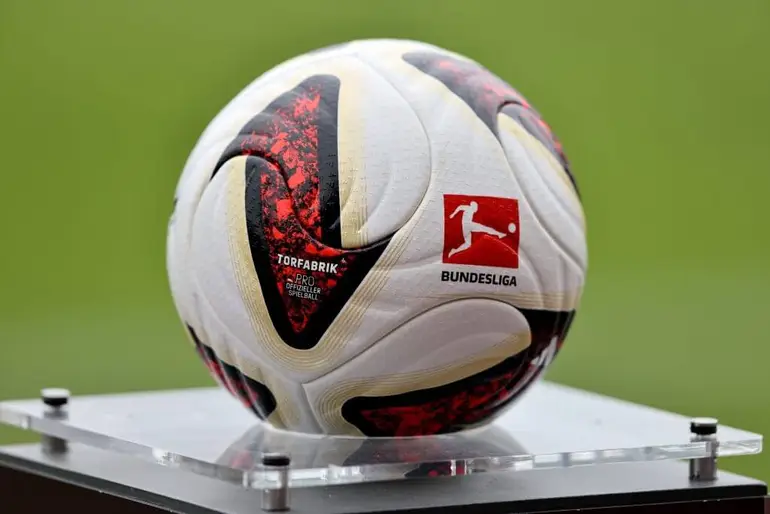
As first reported by Bild, representatives from the German Football League and Apollo Sports Capital met in New York in June to discuss a framework for a 20-year loan, with future domestic broadcasting revenue from the league serving as collateral. Sources familiar with the matter said the proposal did not come through a bidding process and would not involve any transfer of equity.
Any potential agreement would still require approval from the 36 member clubs across the Bundesliga and Bundesliga 2. A two-thirds majority vote would be needed for the deal to go ahead.
Although the talks remain at an early stage, they represent the latest development in the long-running and highly controversial debate over external investment in German football.
External investment has always been a divisive issue in Germany. However, with the Premier League’s enormous financial advantage, Bundesliga clubs continue to face the challenge of competing against leagues backed by significantly greater resources.
In Germany, club operations are governed by the “50+1 rule”, which means that club members must retain at least 50% plus one voting share. While there are some exceptions, the rule fundamentally prevents a single external investor from taking control of a club and ensures that decision-makers remain accountable to supporters, who are considered key stakeholders.
The positive impact of the rule is clear: affordable ticket prices have helped Bundesliga stadiums remain packed, creating some of the most passionate atmospheres in world football — both of which are major selling points for the league.
More broadly, the system protects clubs’ identities, keeping them closely connected to their local communities and preventing them from being used for purposes beyond football, such as reputation laundering.
However, critics argue that the lack of external investment has made it difficult for Bundesliga clubs — apart from Bayern Munich — to remain competitive in European competitions or afford the world’s top players.
Furthermore, Bayern’s financial superiority over its domestic rivals has become increasingly apparent. The club has won 13 of the past 14 Bundesliga titles, and this dominance has raised concerns that the league’s competitiveness and international appeal could suffer.
This represents one of German football’s biggest dilemmas: how to preserve the strengths of the Bundesliga while challenging the Premier League’s financial dominance.
English clubs benefit not only from huge broadcasting revenues but also from backing by sovereign wealth funds, private equity firms and billionaire owners.
So far, there is no clear solution.
The German Football League — the organisation responsible for running Germany’s top two professional divisions (known as the DFL until 2026) — has previously made two attempts to introduce external investment at league level.
In 2023, the first proposal involved selling a 12.5% stake in the league’s future domestic broadcasting rights over 20 years to a private equity firm in exchange for €2 billion in funding.
The money would have been used to support central marketing initiatives, help member clubs with overseas tours and improve infrastructure, with the long-term goal of increasing German football’s global appeal.
However, under the influence of the 50+1 rule, supporters launched fierce protests.
Opposition came from various groups, but the main argument was that selling part of the league’s future revenue would shift power away from supporters and toward private investors, gradually weakening fan influence.
The proposal required approval from two-thirds of the 36 member clubs but failed to secure enough votes and was rejected.
A year later, a revised version was presented.
In December 2023, member clubs approved a new proposal to sell an 8% stake in future domestic broadcasting rights over 20 years in exchange for €1 billion in investment.
The deal passed the two-thirds majority threshold, but it was eventually abandoned in February 2024 after nationwide protests continued to disrupt matches for several weeks.
Fans displayed banners condemning the agreement and famously threw tennis balls, chocolate and sweets onto pitches, causing lengthy delays and generating widespread negative media coverage.
Facing mounting opposition, the German Football League ultimately backed down.
Hans-Joachim Watzke, then CEO of Borussia Dortmund and spokesperson for the league’s executive committee, admitted:
“Given the current developments, the process can no longer be successfully continued.”
He also acknowledged that “the majority supports the commercial necessity of a strategic partnership.”
Now, the latest chapter has begun.
If an agreement with Apollo Sports Capital is eventually finalised and approved, it remains unclear whether the funds would be used for the same purposes outlined in the previous two proposals.
With the new Bundesliga season not starting until the final week of August, supporters will have to wait before making their voices heard on the latest investment proposal.
 Telegram
 Facebook
 X
X